Cambodia
Discover Cambodia
Cambodia is rich in history, temples, sandy white beaches, mouth-watering cuisine with a French flair, and one-dollar Angkor beer. Yet Cambodia is still overshadowed by its neighbours Vietnam and Thailand. And that's exactly why YOU should visit this fascinating country!
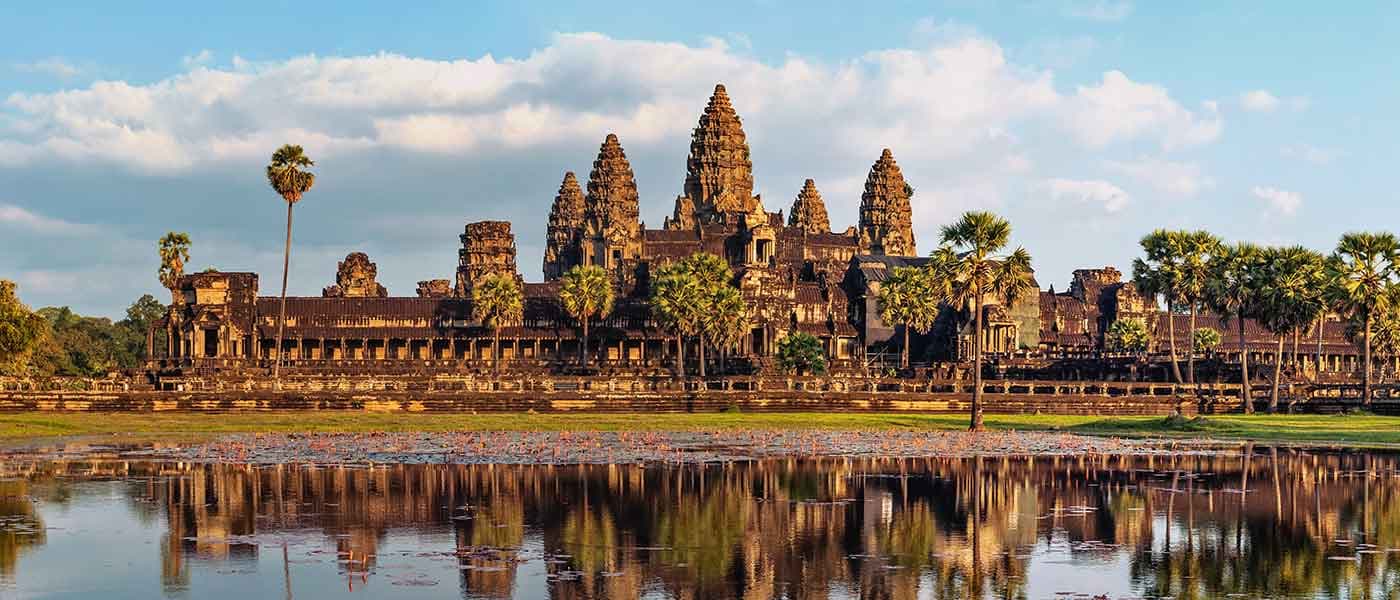
Cambodia is a bucket list destination for a lot of people looking to witness the magnificent Angkor Wat, the largest religious temple complex in the world. Who doesn’t want to discover over one thousand temples built in the 12th century?
We’ve created this ultimate guide to Cambodia to share with you everything that this unique country has to offer. Decided that Cambodia is a place you want to visit?
Delve into our eight detailed guides that offer insights into the best activities and must-see attractions that Cambodia has to offer.
Is Cambodia worth visiting?

But that’s not all that Cambodia has to offer. This country has had a devastating and dark history at the hands of the Khmer Rouge and communist dictator Pol Pot. Almost a quarter of the population died in four years. You can learn about this terrible point in time and the people’s stories through sites such as the Killing Fields and the S21 Museum.
History aside, the nature of Cambodia is spectacular. It boasts extraordinary countryside and paradise islands that not everyone knows about yet.
You could say that Cambodia really does have something for everyone!
Is Cambodia safe?
Generally, Cambodia is considered a safe country, home to some of the friendliest people in Southeast Asia. Like with pretty much every country around the world, there are some things to keep an eye out for; petty theft, pick-pocketing, scams and road safety.
Make sure to keep an eye on your belongings and practise common sense.
Best destinations in Cambodia


Top 3 destinations in Cambodia
Cambodia is a fascinating country offering lots of different opportunities and adventures depending on where you go.
As hard as it is to pick, here are our top three places to visit in Cambodia:
Siem Reap — home to the largest religious temple, Angkor Wat

In Siem Reap, you’ll find the world-famous Angkor Wat. The largest and most recognised religious temple complex in the world. Covering an area four times the size of Vatican City, there are over a thousand separate temples and temple ruins for you to explore.
And when you’re not discovering the magnificent Angkor Wat, Siem Reap is a fun city to explore. Once colonised by France, this small city has a quaint French flair with French-style homes and shops scattered throughout.
Love a good party? Siem Reap also offers plenty of places to get those hips moving. Whether it’s in the cheerful Irish pubs, fancy cocktails or lively bars.
After visiting Siem Reap, why not consider travelling from Siem Reap to Battambang?
Phnom Penh — a city mixed with life and death

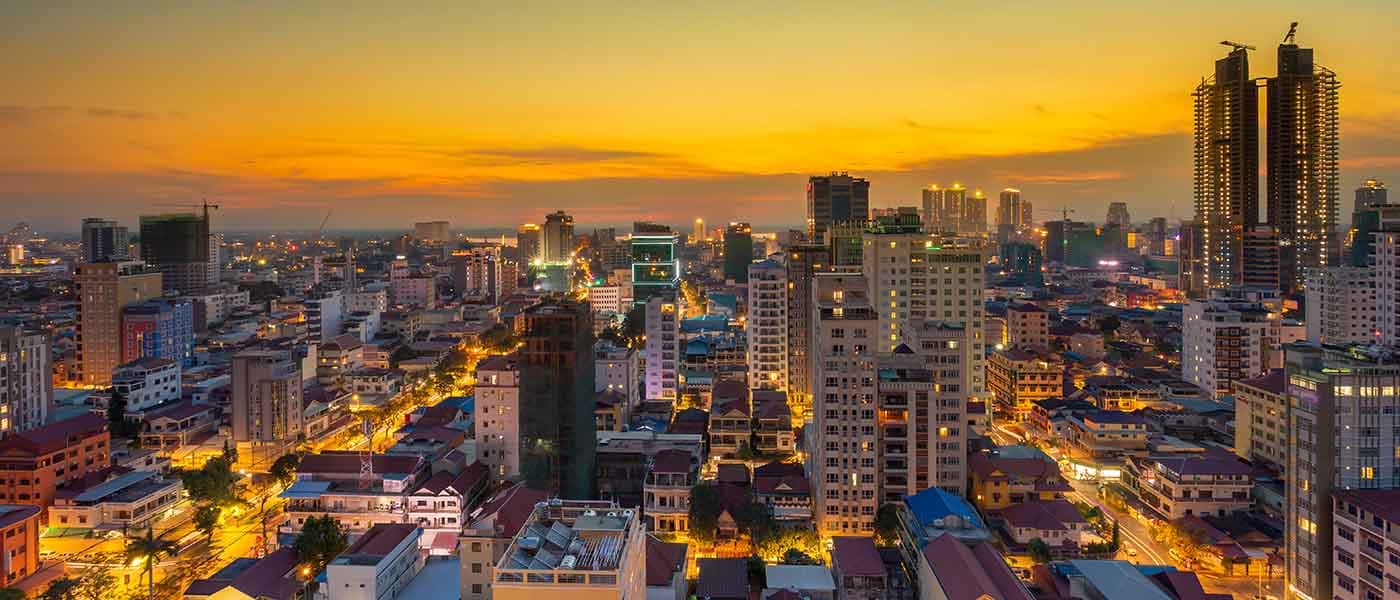
Phnom Penh is the capital of Cambodia, situated in the south-central part of the country. It’s arguably one of the most interesting and educational destinations in the whole of Southeast Asia with its devastating history.
A visit to the Killing Fields and the S21 Museum will be filled with emotion, but it’s somewhere everyone should visit, if possible, to learn from history's mistakes in order to not repeat them.
Both these sites chronicle the horrors and brutality of the repressive Khmer Rouge regime, spearheaded by tyrannical communist dictator Pol Pot, who orchestrated the killing of a quarter of Cambodia’s population between 1975 to 1979.
Arriving in Phnom Penh by plane, here's how to get from Phnom Penh airport to the city centre.
Koh Rong Islands — Cambodia's paradise islands

The Koh Rong islands are often touted as the ultimate Cambodian paradise. The two islands, Koh Rong and Koh Rong Sahloem, sit peacefully in the Gulf of Thailand, just off the coast of Sihanoukville.
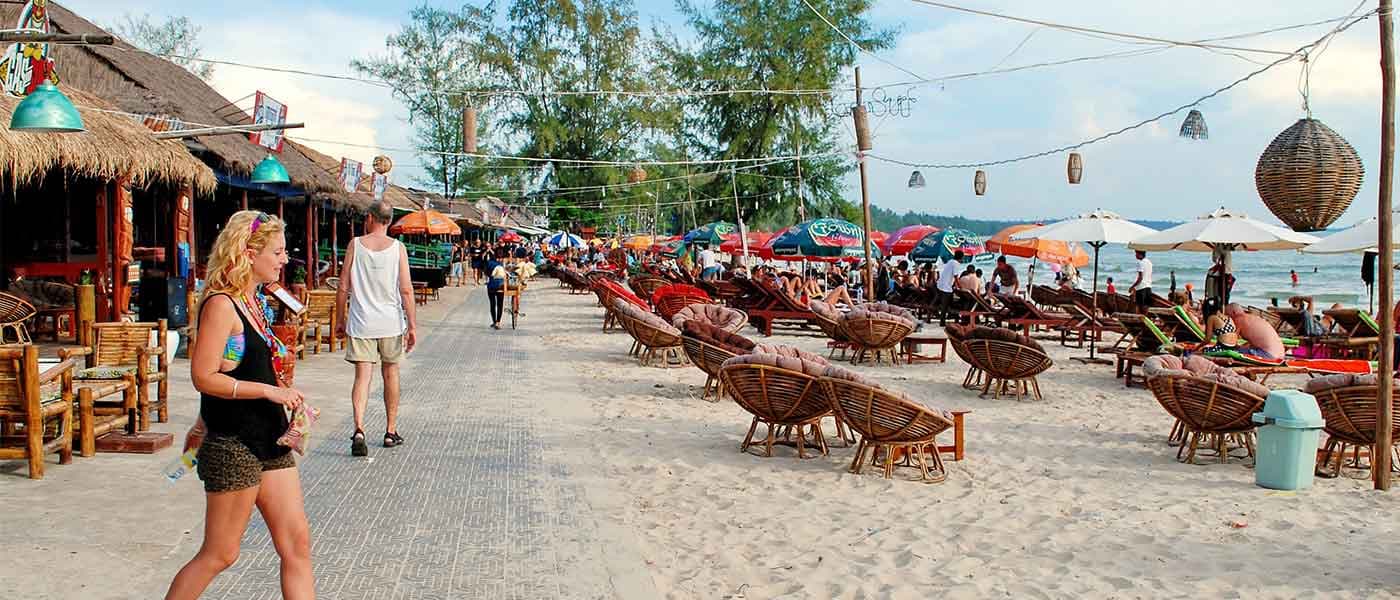
Untouched places on Earth are hard to find nowadays, but the Koh Rong islands come pretty close to this. The interiors of the islands boast luscious jungle-like rolling hills bursting with vegetation, while the white-sand tropical beaches remain largely undeveloped.
Koh Rong is the bigger of the two islands and slightly more developed, but both of them offer the perfect location to sit back, relax and soak up the sunshine.
The journey from Sihanoukville to Koh Rong takes under an hour and the same for Sihanoukville to Koh Rong Sanloem.
When is the best time to travel to Cambodia?
Cambodia keeps it simple, having only two seasons to plan around — wet and dry season. This is pretty similar to most other Southeast Asian countries.
Dry season (October to April)
The best time to visit Cambodia is during the dry season which runs between October and April. As the name suggests, this is when the country experiences the least amount of rainfall.
In terms of temperature, October, November and December are some of the coolest months. Don’t worry, cool doesn’t mean cold! Temperatures are around 24°C and slowly begin to climb as the months go on to around 35°C. March and April are the most humid months.
You’re probably not going to be the only one wanting to make the most of the good weather, so that does mean that Cambodia is at its busiest during the dry season.
Wet season (May to October)
As May rolls in, so do the rains, thanks to the southwest monsoon. The rainy season runs from May to October, with almost 75% of Cambodia’s annual rainfall happening during these months.
For the majority of the months, temperatures stay around 25°C and 27°C. May to July have other ideas and remain very hot, making the short downpours a welcome relief from the heat.
Should you visit during the wet season?
A little rain never hurt nobody, but we get that it can be annoying if your plans are constantly dampened by the rain. The rain from May to July is manageable, with the downpours heavy but short. The heaviest rains occur in August and September, so these are the months to avoid if possible.
However, there are some benefits of visiting Cambodia during the wet season. There are fewer tourists, prices are often lower and you’ll be there when Cambodia is at its prettiest. The monsoons give Cambodia a new lick of life, with greenery thriving everywhere. It’s stunning!
How to get around in Cambodia
Cambodia isn’t the biggest of countries, which luckily for us means that we don’t have to endure too many back-breaking long journeys. And as tourism increases in Cambodia, its transport networks are also improving.
Here are the best ways to get around Cambodia:
By bus

Buses are likely to be your main way of navigating between towns and cities in Cambodia. They’re a cheap and reliable way to get around and are generally quite comfortable. Especially buses running between popular destinations.
Some buses are air-conditioned with comfortable seats, while others may have basic amenities and no air conditioning, so it’s important to check the bus company before buying your ticket.
A lot of the time, tickets can be bought at the bus station or onboard the bus. However, more and more companies are now offering online booking. Bookaway and 12Go.Asia are two great websites for booking online.
Great news, most buses will be less than $20 in Cambodia.
By tuk-tuk

Tuk-tuks are pretty much everywhere in Cambodia. These colourful three-wheel rickshaws are a fun and cheap way to get around. They’re mostly used for inner-city travel, but they can be a cheap way to travel short distances between towns too.
For example, a 40-minute tuk-tuk from Kampot to Kep will cost around $15.
Make sure to agree on a price before getting in.
By taxi
Just like tuk-tuks, taxis are everywhere in Cambodia. They’re much more comfortable than tuk-tuks, so if you have a lot of luggage with you, or you’re travelling a longer distance, we’d recommend hopping in a taxi instead.
It’s easy to pick up a taxi from the street, but we’d recommend downloading one of Cambodia’s taxi-hailing apps. PassApp and Grab are the two most popular apps, with PassApp having the largest coverage. The great thing about using the app is that you don’t need to haggle or worry about getting scammed. The right price will be suggested on the app.
By bicycle

Unless you’re a keen cyclist, you’re probably not going to be cycling from Siem Reap to Phnom Penh, but bicycles are a great way to get around cities and explore their surrounding countryside.
As well as burning off the calories gained from all the delicious Cambodian cuisine, they’re super cheap to hire. You’re unlikely to pay more than $5 a day to rent a bicycle.
By boat
Travelling around Cambodia by boat is more of a fun experience rather than a convenient one. You can actually get a boat from Siem Reap to Phnom Penh. It takes around 6 hours and costs around $40, which is about double what the bus costs.
A boat also runs between Siem Reap and Battambang.
Entry requirements and visa for Cambodia
Unless you're from one of the lucky ten countries that don't need a visa to visit Cambodia, you're going to need to apply for a visa either online in advance or at one of the designated ports.
You can check whether you need a visa here.
The best way to get a visa is to apply online and obtain an eVisa. You fill in an application form, pay $36 and you should have a single-entry 30-day visa within a few days. It's recommended to have two printed copies of your eVisa.
If you don't want to apply online, you can get a visa on arrival, but these are only available at certain ports of entry, including Phnom Penh and Siem Reap International Airports, and certain land border crossings.
For both types of visa, your passport must be valid for at least six months.
Must-try Cambodian food

You hear a lot about Vietnamese and Thai food, but do you actually know a lot about Cambodian food?
Cambodian food is a beautiful blend of flavours, influenced by a number of countries — China, India, Laos, Myanmar, Vietnam, Thailand, and France.
Eating your way around Cambodia is one of the top things that you should do, and here are some dishes and drinks that you can’t leave Cambodia without trying:
- Amok — this is Cambodia’s national dish and a must-try while you’re in Cambodia. It’s a spicy coconut fish curry that has a delicious mousse-like texture which literally melts in your mouth. If you’re not a fan of fish, don’t worry, you can substitute it for chicken, tofu or even snails!
- Kuy teav - another popular Cambodian dish is this noodle soup served commonly for breakfast. You’ll find it being sold by a number of street vendors, so it’s always on hand when you need it. It’s normally made from rice vermicelli and beef or pork bones, flavoured with fried shallots, green onion, garlic and bean sprouts.
- Nom Banh Chok - you’ll find plenty of noodle and rice-based dishes in Cambodia, and Nom Banh Chok is another popular noodle dish. Again, you’ll typically find this dish at breakfast, but it can also be consumed as an afternoon snack. These fermented rice noodles are full of flavour, simmered for hours in coconut milk and finished with an array of toppings.
- Kampot pepper crab - if you’re visiting Kampot, this dish is something that you can’t leave without trying. It might be the freshest crab you’ve ever tried, flavoured with the famous Kampot pepper. You can find out more about this dish in our Kampot guide.
Essential travel tips for Cambodia

Here are some of our best tips to make your trip to Cambodia that bit easier:
Paying with Cambodian Riel in Cambodia
The official currency in Cambodia is the Cambodian Riel, however, the US dollar is the unofficial second currency.
The Cambodian government is currently trying to phase out the US dollar, starting with the lower denominations, so it’s good to carry both US Dollars and Cambodian riel.
Generally, debit and credit cards aren’t accepted in most establishments, so we recommend always having cash on you, whether it’s Cambodian riel or US Dollars.
ATMs
What we all hate to hear — most ATMs in Cambodia charge a fee of around $4-6. Head to ABA, ACLEDA and Vattanak if you’re looking for the lowest fees.
It’s also recommended to get cash from ATMs in the bigger cities such as Phenm Penh before heading to the smaller towns, islands and the countryside where it might be harder to find a working ATM.
Buying a sim card in Cambodia
While a lot of cafes, restaurants and hotels offer free Wi-Fi, it’s likely that you’re going to want internet whilst out and about. We recommend getting a local sim card. The plans are extremely cheap.
The three main mobile providers in Cambodia are Metfone, Smart Cambodia and Cellcard. You’ll be able to buy a sim card from some airports or at a mobile provider's store. Each of the providers have a number of tourist plans to choose from, ranging from $2-10.
You'll need to make sure that your phone is 'unlocked' which means that you can put any sim card in your phone, rather than being locked to a specific provider.
Khmer language cheat sheet
The language spoken in Cambodia is Khmer. 90% of the country speaks it.
It’s always good to know a few essential words before travelling to a place, so here are a few to get you started:
- Hello (informal) - Soo sdai
- Thank you - Aw kuon
- Please - Suom
- Sorry - Suom dtoh
- Beer - beer
The perfect packing list for Cambodia
For the majority of your time in Cambodia, you’ll probably be enjoying warm temperatures and lots of sunshine, meaning you’ll need cool and light clothes.
However, if you’re exploring Cambodia during the rainy season (May to October) a rain jacket or poncho is a good thing to have on hand.
We’ve put together the ultimate packing list for Southeast Asia, but here are some of our ‘never-leave-home-without-them’ items on on our packing list:
- Reusable water bottle – they’re better for the environment and can save you money on water.
- A portable charger – there’s probably going to be a time when your phone’s battery is on red, at a time that you desperately need it.
- An adaptor – Cambodia uses plugs A, C and G. A universal travel adaptor is a great buy if you’re travelling between different continents.